
Small Business Branding: A Practical Guide to Building a Brand People Remember
Branding is more than a logo. Here is a clear, step-by-step guide to building a small business brand that feels like you and earns trust — from strategy to colors, fonts, and your website.
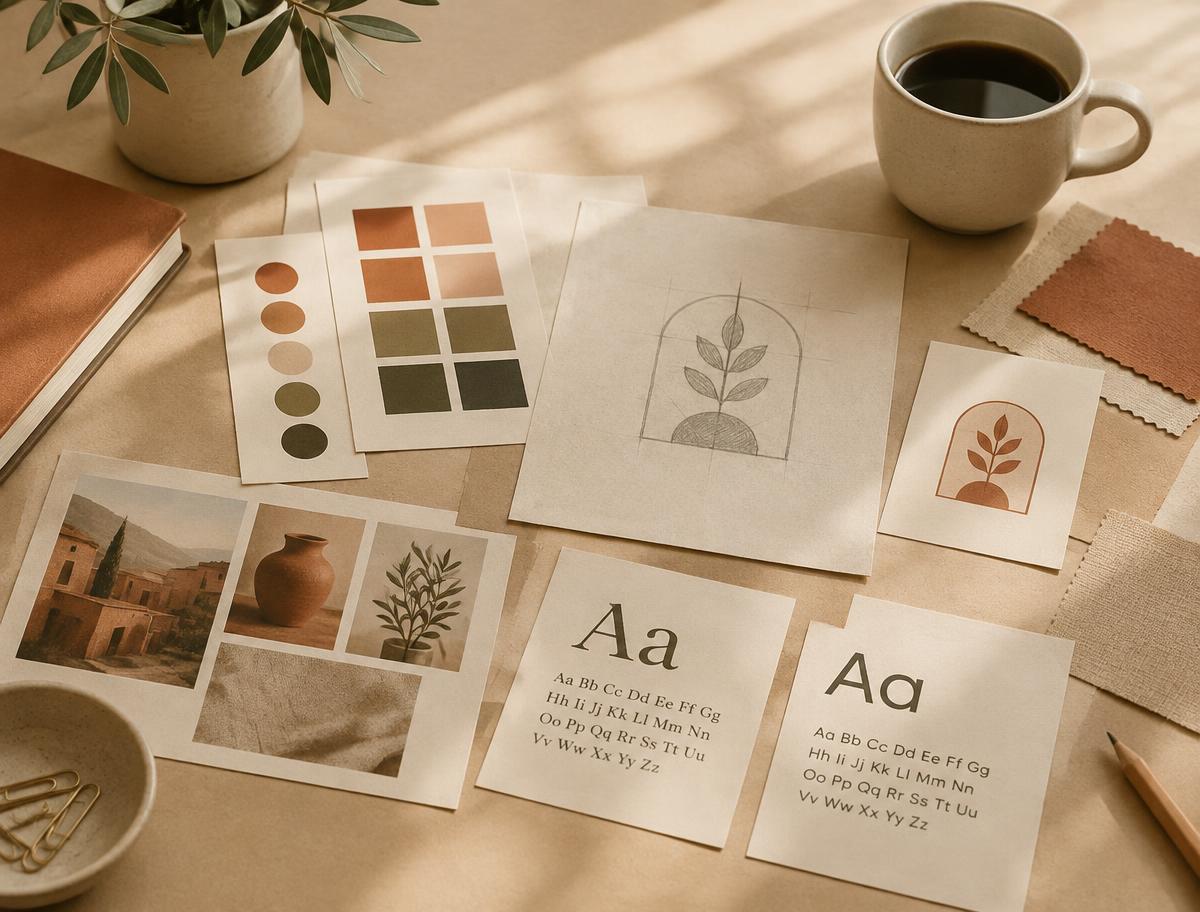
When most small business owners hear the word branding, they think of a logo. A logo matters, but it is only one piece. Your brand is the feeling people get when they meet your business — on your website, on Instagram, on a business card, or in person.
This guide walks through the same steps I use with my own clients, in plain language, so you can build a brand that feels like you and earns trust.
1. Start with strategy, not visuals
Before choosing a single color, answer three questions:
- Who are you serving? Be specific. "Women who run wellness studios" is a brand. "Everyone" is not.
- What do you want to be known for? One clear strength beats a long list of services.
- How should people feel? Calm and premium? Bold and playful? This feeling guides every design decision later.
Write your answers down. They become the filter for every choice that follows.
2. Choose a color palette with intention
Color is the fastest way to set a mood. A simple, reliable structure:
- One primary color — the color people associate with you.
- One or two neutrals — for backgrounds and text, usually a warm off-white and a deep ink.
- One accent — used sparingly for buttons, links, and small details.
Three to five colors total is plenty. If you want a deeper walkthrough, I wrote a full article on creating a brand color palette that reflects your style.
3. Pick two fonts and commit
You need exactly two typefaces:
- A display font for headlines — this carries your personality.
- A readable font for body text — this carries your content.
The most common mistake I see is using five or six fonts across a website and social posts. Consistency is what makes a small business look established.
4. Design a logo that works small
Your logo must be legible as a tiny social media avatar and as a website favicon, not just on a big sign. A simple wordmark or monogram ages far better than a complicated illustration. Test it at 32 pixels — if you can still read it, it works.
5. Build a website that matches
Your website is where the brand becomes real. A few rules:
- Use your palette and fonts on every page — no exceptions.
- Write like you talk. Short sentences, real words, no jargon.
- Show real photos of your work, your space, or yourself. Stock photos undo trust fast.
- Make the next step obvious: one clear button, like "Start Your Project" or "Book a Call."
6. Stay consistent everywhere
Branding fails in the gaps: a beautiful website paired with a mismatched Instagram feed, or an elegant logo on a cluttered flyer. Create a simple one-page brand sheet — colors with their codes, your two fonts, logo versions, and a few photo examples — and check every new piece of content against it.
The bottom line
Small business branding is not about looking big. It is about looking clear, consistent, and unmistakably you. Start with strategy, keep your visuals simple, and repeat them everywhere. That repetition is what turns a small business into a brand people remember.
If you would like a hand building yours, get in touch — this is exactly what we do at the studio.
— El Hassania Hechadi